The research behind our Fragrance-Free Rich Cream
What oils, butters and waxes do for dry skin, what the studies on each ingredient really found, and why we left the perfume out.

Dry skin is one of the few skin problems where the answer really is in the jar, or in this case the pump. It needs oil and it needs help holding on to water, and a good rich cream supplies both. What it doesn't need is a list of promises, and it certainly doesn't need perfume.
This guide goes through our Fragrance-Free Rich Cream ingredient by ingredient, with the published research behind each one and what that research does and doesn't show. If you only want the product, everything is on one page. If you are not sure whether your skin needs a rich cream at all, start with rich cream or light moisturiser? If you want to know what "fragrance-free" should mean on a label, read what fragrance-free really means.
01What dry skin is actually short of
The outer layer of the skin, the stratum corneum, works like a brick wall. The bricks are flattened dead cells, and the mortar between them is a mixture of fats: ceramides, cholesterol and free fatty acids. Inside the bricks sits the natural moisturising factor, a set of small water-loving molecules that keep the cells supple. When the mortar is thin or the moisturising factor runs low, water escapes faster than it is replaced, and the skin feels tight, looks dull and flakes.
That is dry skin in the sense most people mean it: skin short of oil, which then struggles to hold water. It is different from dehydrated skin, which can be oily and still feel tight because it is short of water. Our comparison of ceramides and hyaluronic acid covers that difference in detail. A rich cream is aimed at the first problem. A light, humectant-based moisturiser is aimed at the second.
Weather, age, hot showers, harsh cleansers and central heating all make it worse. Winter in Northern and Central Europe is a reliable trigger: cold air outside holds little water, and heated air inside holds even less.
02How a moisturiser works: three jobs
Almost every moisturiser is a mix of three kinds of ingredient. Humectants attract water into the outer layer of the skin. Emollients are oils and fats that fill the gaps between skin cells, so the surface feels smooth and soft. Occlusives form a thin film that slows water evaporating from the skin. Many ingredients do more than one job: shea butter is both an emollient and a mild occlusive.
A light moisturiser leans on humectants. A rich cream leans on emollients and occlusives. This one is built mostly for the second job, which is what dry skin needs most.
| Job | What it does | In this cream |
|---|---|---|
| Humectant | Draws water into the skin's outer layer | Glycerin, pentylene glycol |
| Emollient | Softens and smooths the surface | Organic sunflower oil, organic argan oil, dicaprylyl carbonate, olive oil unsaponifiables |
| Occlusive | Slows water loss | Organic cocoa and shea butters, sunflower wax, Japan wax |
| Support | Keeps the formula stable and the oils fresh | Vitamin E, ascorbyl palmitate, sodium phytate, lactic acid |
The order of the ingredient list tells you roughly how much of each is present, because EU law requires ingredients above 1% to be listed in descending order. Water comes first. Organic sunflower oil is second and organic cocoa butter third. Glycerin is eighth, argan oil ninth and shea butter eleventh. Everything below about the middle of the list is likely to be present at 1% or less.
03The honest starting point: does the brand matter?
Before looking at single ingredients, it is worth knowing what the best overview of moisturiser research concluded. Most of the rigorous trials have been done in people with eczema, because that is where dry skin causes the most harm.
Moisturisers in general
Evidence: Cochrane review of 77 trials- van Zuuren E.J., Fedorowicz Z., Christensen R., Lavrijsen A., Arents B.W.M. Emollients and moisturisers for eczema. Cochrane Database Syst Rev 2:CD012119, 2017. Read the source
We find this reassuring, and we think you should too. It means you don't need an expensive "hero" ingredient to help dry skin. You need a cream you like using, that suits your skin and that you will apply every day. So the rest of this guide explains why each ingredient is in the formula, and we are careful not to claim that any of them is the reason it works better than something else.
04Sunflower seed oil: second on the list
Organic sunflower seed oil is the largest oil in the cream. It is rich in linoleic acid, an essential fatty acid the skin uses to build part of its barrier. Linoleic acid is also one reason sunflower oil behaves differently from olive oil on the skin, which one small study showed clearly.
Sunflower seed oil
Evidence: small human study- Danby S.G., AlEnezi T., Sultan A., et al. Effect of olive and sunflower seed oil on the adult skin barrier: implications for neonatal skin care. Pediatr Dermatol 30(1):42–50, 2013. Read the source
This cream contains olive oil unsaponifiables, twelfth on the list, and no olive oil as such. Unsaponifiables are the small non-fatty part of the oil, mostly plant sterols and squalene, and they aren't the part the study looked at. We mention it because people who have read about olive oil often ask.
05Cocoa butter: rich, familiar, and oversold
Organic cocoa butter is third on the list, and it is what gives the cream much of its richness. It is solid at room temperature and melts at around body temperature, which is why the cream feels firm in the bottle and softens as you warm it between your fingers. It is a good emollient and a mild occlusive.
Cocoa butter also has a reputation it hasn't earned: for decades it has been sold as a way to prevent stretch marks. One well-run trial tested exactly that.
Cocoa butter
Evidence: placebo-controlled trial- Osman H., Usta I.M., Rubeiz N., et al. Cocoa butter lotion for prevention of striae gravidarum: a double-blind, randomised and placebo-controlled trial. BJOG 115(9):1138–1142, 2008. Read the source
We include this study because it is the best trial of cocoa butter we could find, and because it makes our point better than we could. Cocoa butter is in this cream to soften and seal dry skin, a job every rich butter does. We make no other claim for it.
06Shea butter and plant oils
Organic shea butter is eleventh on the list. Like cocoa butter it is a solid fat, softer and less brittle, with a small fraction of non-fatty compounds such as triterpenes. It has been used on skin in West Africa for a very long time, and it is one of the most common butters in dry-skin creams.
Shea butter and plant oils
Evidence: review- Lin T.K., Zhong L., Santiago J.L. Anti-inflammatory and skin barrier repair effects of topical application of some plant oils. Int J Mol Sci 19(1):70, 2017. Read the source
07Argan oil: a small study on the forearm
Organic argan kernel oil is ninth on the list. It comes from the kernels of the argan tree, which grows in south-western Morocco, and it is rich in oleic and linoleic acids with a little vitamin E. There is one human study on argan oil and the skin that is often quoted, so it is worth reading carefully.
Argan oil
Evidence: small human study, no placebo oil- Boucetta K.Q., Charrouf Z., Aguenaou H., Derouiche A., Bensouda Y. The effect of dietary and/or cosmetic argan oil on postmenopausal skin elasticity. Clin Interv Aging 10:339–349, 2015. Read the source
It is an interesting study and we don't want to overstate it. We use argan because it is a well-tolerated, pleasant oil that sinks in reasonably well, and it gives the cream a smoother feel than butters alone. We don't sell this as an anti-ageing cream.
08Glycerin: the humectant that does the heavy lifting
Glycerin is eighth on the list, and it is made using organic ingredients. It is the most studied humectant in skincare: it draws water into the outer layer and helps keep it there. In a rich cream it balances the oils, so the skin gets water as well as fat.
Glycerin
Evidence: review- Fluhr J.W., Darlenski R., Surber C. Glycerol and the skin: holistic approach to its origin and functions. Br J Dermatol 159(1):23–34, 2008.
09Two plant waxes, and a note on Japan wax
Sunflower seed wax is tenth on the list. It is the waxy coating of sunflower seeds, refined into pale pellets, and it gives the cream its body and helps slow water loss. Further down, eighteenth, is a second wax listed as Rhus Verniciflua Peel Cera / Rhus Succedanea Fruit Cera, better known as Japan wax. It comes from the fruit of the Japanese wax tree and has been used in cosmetics and candles for centuries.
There is one thing we want you to know about it. The Japanese wax tree belongs to the same plant family as poison ivy and mango, and to the same genus as poison ivy. Those plants contain urushiol, a strong skin allergen. The wax is refined and is widely used in lip balms and creams, and we found no published report of reactions to it in a finished face cream. We did find a short 1985 report in the journal Contact Dermatitis titled "Contact dermatitis to Rhus succedanea".
So our advice is simple: if you have ever reacted to poison ivy, to lacquerware or to mango skin, patch test before using this cream. For everyone else, it is a plant wax doing a plant wax's job.
- Nakamura T. Contact dermatitis to Rhus succedanea. Contact Dermatitis 12(5):279, 1985. (We could read the title only.) Read the source
10Cloudberry: a Nordic berry, and a lab result
Organic cloudberry fruit extract is fourteenth on the list. Cloudberries grow in bogs across Scandinavia, Finland and the Baltic, and they are rich in ellagitannins, a family of plant polyphenols. The research on them is chemistry, not skincare.
Cloudberry
Evidence: lab only- Kähkönen M., Kylli P., Ollilainen V., Salminen J.P., Heinonen M. Antioxidant activity of isolated ellagitannins from red raspberries and cloudberries. J Agric Food Chem 60(5):1167–1174, 2012. Read the source
The honest reading: cloudberry extract is a nice, organic plant ingredient that may help protect the oils in the formula from going off, alongside the vitamin E and ascorbyl palmitate further down. We don't claim it does anything to your skin that you could see.
11Why there is no perfume in it
Butters and plant waxes have a smell of their own, and many rich creams add perfume to cover it. We left it out, for one reason: fragrance is one of the most common causes of allergic reactions to cosmetics, and a face cream is left on the skin every day.
Fragrance allergy
Evidence: large population study- Diepgen T.L., Ofenloch R., Bruze M., et al. Prevalence of fragrance contact allergy in the general population of five European countries: a cross-sectional study. Br J Dermatol 173(6):1411–1419, 2015. Read the source
12The vanilla question
This cream contains organic vanilla bean extract, twenty-first of 25 ingredients. It isn't a perfume ingredient and it isn't an essential oil, so the cream is fragrance-free by the usual definition, and it contains nothing from the EU fragrance allergen list. But vanilla naturally contains vanillin, and since 2023 vanillin has been on the EU's expanded list of fragrance allergens that must be named on the label above a small threshold.
We would rather tell you than have you discover it. You may notice a faint natural smell, from the vanilla and the cocoa butter. If you know you react to vanilla, patch test before using it. Our guide to what "fragrance-free" really means explains the rules in full.
- Commission Regulation (EU) 2023/1545 of 26 July 2023 amending Regulation (EC) No 1223/2009 as regards labelling of fragrance allergens in cosmetic products. Official Journal of the European Union L 188, 2023. Read the source
13Rich creams and breakouts
A common worry about rich creams is that they block pores. You will find lists of "comedogenic" ingredients online, many of them based on old tests on rabbit ears using undiluted ingredients. A small human study tested the idea on finished products.
Comedogenicity
Evidence: small human study- Draelos Z.D., DiNardo J.C. A re-evaluation of the comedogenicity concept. J Am Acad Dermatol 54(3):507–512, 2006. Read the source
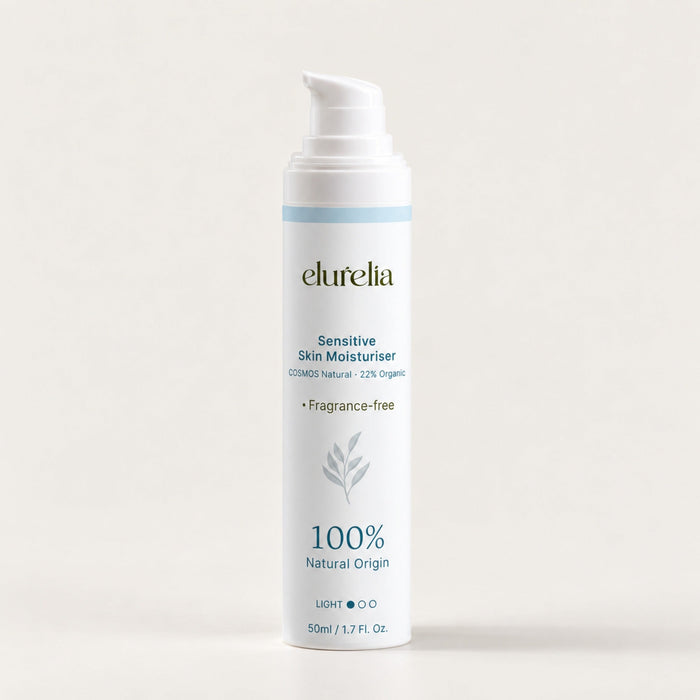
The practical advice: if your skin is oily or breaks out easily, start by using this cream only on the areas that feel dry, such as the cheeks, and watch for a couple of weeks. Or choose our lighter Fragrance-Free Sensitive Skin Moisturiser.
14What COSMOS Natural means here
The cream is certified COSMOS Natural by Ecocert. Its natural-origin content is 99% and its organic content is 20%, both calculated to the COSMOS standard. Six ingredients are from organic farming (sunflower oil, cocoa butter, argan oil, shea butter, cloudberry and vanilla), and its glycerin is made using organic ingredients. COSMOS Natural checks where ingredients come from and how they are processed; it doesn't set an organic minimum, which is why we don't call the cream organic.
15How to use it, and how long it lasts
Cleanse with lukewarm water and a mild cleanser, then pat your skin dry. Warm one pump between your fingertips until it softens. Press it over the driest areas first, then smooth what is left over the rest of the face and neck. At night that is all. In the morning, give it a few minutes, then apply sunscreen on top.
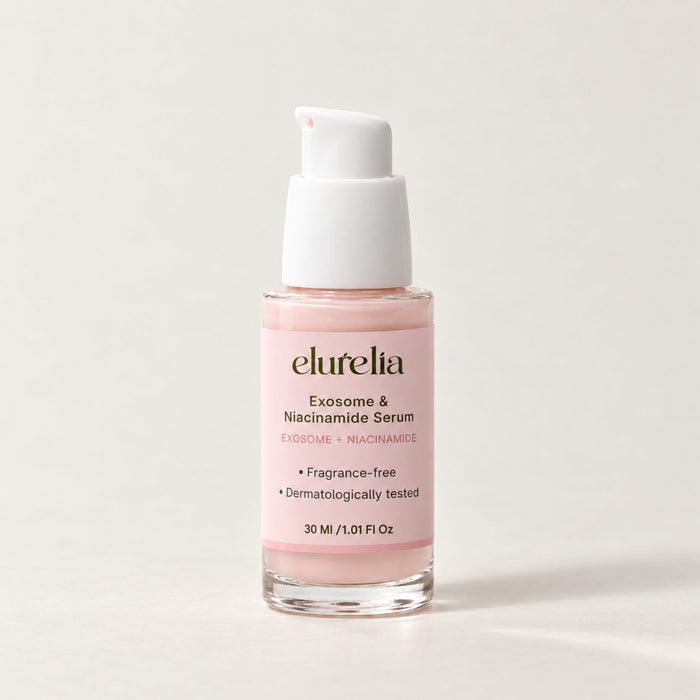
If you use a serum, apply it before the cream. Our Fragrance-Free Niacinamide Serum is also fragrance-free, with no declared allergens. Used once a day, a 50 ml bottle lasts around two months.
16Who it suits, and who should skip it
It suits you if your skin is dry or very dry and feels tight; fragrance bothers your skin or you would rather avoid it; you like a rich cream you can feel; or you want a winter cream or a night cream without perfume.
Skip it, or check first, if your skin is oily or breakout-prone and dislikes rich creams; you want something light that disappears fast (our Sensitive Skin Moisturiser); you have a nut allergy, because it contains argan, shea and cocoa; you have reacted to poison ivy, lacquerware or mango skin; or your skin is cracked, bleeding or very sore, in which case see a pharmacist first.
17What it adds up to
This is a straightforward rich cream: organic sunflower oil, cocoa and shea butters and argan oil, with glycerin and two plant waxes, and no perfume. Each of its main ingredients has a sensible reason to be there, and none of them has a large trial behind it. The strongest evidence we can offer is the general one: moisturisers help dry skin, and no single moisturiser has been shown to be better than the rest.
So we would choose it for the things you can check: how it feels, what it leaves out, and a full ingredient list with nothing hidden. If it sounds right, the product page has the full formula. If your skin is more thirsty than dry, rich cream or light moisturiser? will help you choose.
18Your questions, answered
What is the best cream for very dry skin?
There is no single best. A Cochrane review found no reliable evidence that one moisturiser beats another. Look for a rich cream with oils, butters and a humectant such as glycerin, that you like using every day.
Is cocoa butter good for your face?
It is a good emollient that softens dry skin. It didn't prevent stretch marks in a placebo-controlled trial, so be wary of bigger claims.
Does argan oil help skin?
One small study found better elasticity on the forearm after 60 days of applying argan oil, without a placebo oil. We use it as a pleasant, well-tolerated oil and make no anti-ageing claim.
Is this cream fragrance-free?
Yes. No Parfum, no essential oils and no ingredient from the EU fragrance allergen list. It contains vanilla bean extract, so you may notice a faint natural smell.
Will a rich cream clog my pores?
It can on some skin, but a finished cream's effect can't be predicted from its ingredient list. If you break out easily, use it on dry areas first.
Is it nut free?
We don't label it nut free. It contains argan kernel oil, shea butter and cocoa butter.
Can I use it in the morning?
Yes, with sunscreen on top once it has settled.
Does the 60-Day Promise apply?
Yes, on your first order, conditions apply. The full terms are on our 60-Day Promise page.
This article is for general information and isn't medical advice. Cosmetic products: all claims describe the appearance and feel of skin.