The research behind our Ceramide Barrier Night Cream
Do ceramide creams actually work? What ceramides do in your skin, how plant ceramides differ from skin-identical ones, where ours sit on the ingredient list, and what the research does and doesn't prove.
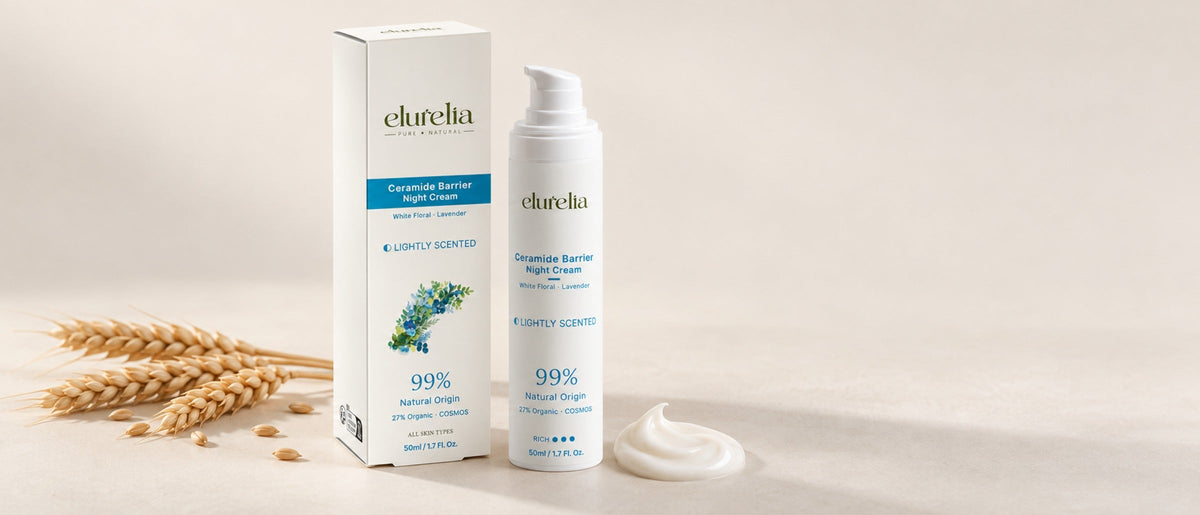
Ceramides are on the front of a lot of jars. The word has become shorthand for "good for your skin barrier", and it sells. What it rarely comes with is the detail: which ceramides, how much, and whether there is evidence that putting them on skin does what the label implies.
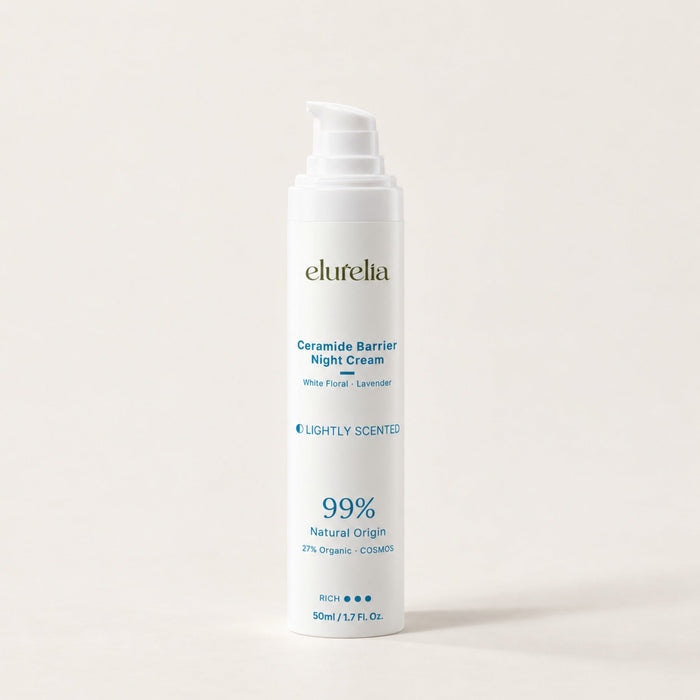
This guide goes through our Ceramide Barrier Night Cream with that detail, one claim at a time. Some of what you read here argues for the cream, and some of it argues for cheaper alternatives. If you only want the product, the night cream page has everything in one place. If you are deciding between ceramides and hyaluronic acid, this comparison explains the difference.
01What ceramides are, and what they do
The outer layer of your skin, the stratum corneum, is often described as bricks and mortar. The bricks are flattened, dead skin cells. The mortar is a set of lipids arranged in thin, stacked sheets between them. That mortar is what slows water escaping from your skin and keeps irritants from getting in.
The mortar is made of three families of lipids in roughly equal amounts: ceramides, cholesterol and free fatty acids. By weight, ceramides make up around a third to two fifths of it. Your skin makes them itself, from building blocks it produces in the living layers below.
When the balance of those lipids is disturbed, skin loses water faster and feels dry, tight and more reactive. Harsh cleansing, cold dry air, age and some skin conditions can all disturb it. That is the reasoning behind ceramide creams: if the barrier is short of ceramides, put some back.
Ceramides in the skin barrier
Evidence: review- Coderch L., López O., de la Maza A., Parra J.L. Ceramides and skin function. Am J Clin Dermatol 4(2):107–129, 2003. Read the source
02Myth 1: "All ceramides are the same"
They aren't. The ingredient lists of ceramide creams contain several quite different things, all sold under the same word.
| Type | Example INCI names | What it is |
|---|---|---|
| Skin-identical ceramides | Ceramide NP, Ceramide AP, Ceramide EOP | Made to match ceramides found in human skin, usually by fermentation |
| Ceramide building blocks | Phytosphingosine, sphingosine | The backbone that ceramides are built on |
| Plant ceramides | Glycosphingolipids, plant extracts rich in them | Ceramides with a sugar attached, from wheat, rice or konjac |
| Look-alikes | Various "pseudo-ceramides" | Synthetic molecules designed to behave like ceramides |
Our night cream uses the third type. Its ceramide ingredients are listed as Glycosphingolipids and Glycolipids. Glycosphingolipids are ceramides with a sugar attached, often called glucosylceramides or phytoceramides. Glycolipids are a related family of sugar-linked plant lipids.
This matters because your own skin works with sugar-linked ceramides too. In the living layers of the epidermis, cells make glucosylceramides and then, as the cells move up, an enzyme removes the sugar to release the ceramides of the barrier. Whether plant glucosylceramides applied to the surface are handled in the same way hasn't been shown, so we don't claim they are.
03Which ceramides are in our cream, and how much
The INCI pair Glycosphingolipids and Glycolipids matches the published ingredient name of a plant ceramide complex extracted from wheat. Its maker describes it as rich in phytoceramides, labels it gluten free, lists it as approved for COSMOS-certified products and suitable for vegans, and recommends using it at 0.2% to 0.5%. We haven't confirmed that ours is that exact grade, which is why we name the ingredient type here, not a brand.
On our list, the two ingredients sit 26th and 27th of 35, after the fragrance. Ingredients are listed in descending order down to 1%, and fragrance is almost always below 1%, so everything after it is too. In plain terms: the plant ceramides are a fraction of a percent of this cream. That is the level such complexes are designed for, but it is small, and we would rather you knew.
- Seppic. CERAMOSIDES™ HP: product information (INCI, source, recommended use level, certifications). Accessed 29 September 2026. Read the source
04How we rate the evidence
| Label | What it means |
|---|---|
| Human trial | People used it and it was measured, ideally against a placebo. |
| Oral trial | People swallowed it. It tells you little about applying it to skin. |
| Review | A summary of earlier studies. |
| Lab | Cells, skin models or animals. Mechanism, not results on people. |
| Composition only | We know what the ingredient contains but found no trial on skin. |
None of the studies below tested our cream. They tested ingredients, usually on their own, in other products or by mouth. We use them to explain why each ingredient is there, and each summary ends with what it doesn't prove.
05Myth 2: "Plant ceramides are proven on skin"
The strongest human evidence for plant ceramides comes from people taking them as capsules. That is a genuine finding, and it is also a different thing from rubbing them on your face.
Wheat glucosylceramides, taken by mouth
Evidence: oral trial- Bizot V., Cestone E., Michelotti A., Nobile V. Improving skin hydration and age-related symptoms by oral administration of wheat glucosylceramides and digalactosyl diglycerides: a human clinical study. Cosmetics 4(4):37, 2017. Read the source
- Guillou S. et al. The moisturizing effect of a wheat extract food supplement on women's skin: a randomized, double-blind placebo-controlled trial. Int J Cosmet Sci, 2011. Read the source
An earlier placebo-controlled trial of a wheat extract supplement in women reported a moisturising effect too. Oral plant ceramides from rice and konjac have their own small trials. Taken together, there is a consistent signal that swallowing plant ceramides can help dry skin.
For skin application, the evidence is thinner. Studies of glucosylceramides applied to lab-grown skin models show they can reduce water loss and switch on genes the barrier depends on. That tells us about mechanism, not about a cream on a person.
Plant glucosylceramides on a skin model
Evidence: lab- Shimoda H. et al. Comparative study on epidermal moisturizing effects and hydration mechanisms of rice-derived glucosylceramides and ceramides. Int J Mol Sci 24(1):83, 2023. Read the source
Even skin-identical ceramides have a delivery problem. They are large, oily molecules that don't dissolve in water, and a review of topical ceramides notes an open debate about how far they get into skin. Several of the positive studies also used creams full of other helpful ingredients, which makes it hard to credit the ceramides alone.
Topical ceramides
Evidence: review- Kahraman E., Kaykın M., Şahin Bektay H., Güngör S. Recent advances on topical application of ceramides to restore barrier function of skin. Cosmetics 6(3):52, 2019. Read the source
06Myth 3: "More ceramide is always better"
It sounds logical: if the barrier is short of ceramides, add as many as you can. The research on barrier lipids suggests the ratio matters more than the amount of any one of them.
Skin lipid mixtures in aged skin
Evidence: human trial- Zettersten E.M., Ghadially R., Feingold K.R., Crumrine D., Elias P.M. Optimal ratios of topical stratum corneum lipids improve barrier recovery in chronologically aged skin. J Am Acad Dermatol 37(3):403–408, 1997. Read the source
What our cream does contain is a member of each lipid family. The plant ceramides are one. The olive oil unsaponifiables, the part of olive oil that isn't fat, contain plant sterols and squalene, relatives of cholesterol. Palmitic and stearic acids, 14th and 15th on the list, are free fatty acids. It would be easy to call that a "complete barrier complex". We won't, because no one has measured whether these amounts, in this cream, do what the pure skin lipids did in the studies above.
07The ingredients that do most of the work
Look at the top of the list rather than the front of the box. After organic aloe leaf juice, the next three ingredients are organic cocoa butter, organic jojoba oil and organic sunflower seed oil. Shea butter, sunflower wax and olive oil unsaponifiables follow. These are what you feel when you put the cream on, and what slows water loss overnight.
| Type | What it does | In this cream |
|---|---|---|
| Humectants | Draw water into the skin | Aloe juice, glycerin, sodium PCA, hyaluronic acid |
| Emollients | Soften and smooth | Jojoba and sunflower oils, dicaprylyl carbonate |
| Occlusives | Slow water loss from the surface | Cocoa and shea butter, sunflower wax and Japan wax |
| Barrier lipids | Resemble the skin's own lipids | Plant ceramides, plant sterols, palmitic and stearic acids |
Sunflower seed oil
Sunflower seed oil and olive oil
Evidence: human trial- Danby S.G. et al. Effect of olive and sunflower seed oil on the adult skin barrier: implications for neonatal skin care. Pediatr Dermatol 30(1):42–50, 2013.
Sunflower oil is rich in linoleic acid, a fatty acid the skin uses to build one of its ceramides. That is one reason a plain plant oil can support the barrier in its own right.
Cocoa butter, shea butter and plant oils
Shea, cocoa and plant oils
Evidence: review- Lin T.K., Zhong L., Santiago J.L. Anti-inflammatory and skin barrier repair effects of topical application of some plant oils. Int J Mol Sci 19(1):70, 2017.
Cocoa butter is a firm, stable plant fat that melts at skin temperature, which is why it gives this cream its rich, cushiony feel. Its best-known trial, on stretch marks in pregnancy, found it didn't prevent them, and we make no such claim. As an emollient for dry skin at night, it does what rich plant fats do: it softens and slows water loss.
Jojoba oil
Jojoba oil
Evidence: review- Pazyar N. et al. Jojoba in dermatology: a succinct review. G Ital Dermatol Venereol 148(6):687–691, 2013.
Jojoba is technically a liquid wax rather than an oil, with a structure close to part of the skin's own sebum. It spreads easily and helps the richer butters feel less heavy.
08The humectants: water in, then held
Butters and oils slow water loss, but they don't add water. That is the humectants' job. This cream has four: organic aloe leaf juice as the base, glycerin, sodium PCA and a small amount of hyaluronic acid.
Glycerin
Evidence: review- Fluhr J.W., Darlenski R., Surber C. Glycerol and the skin: holistic approach to its origin and functions. Br J Dermatol 159(1):23–34, 2008. Read the source
Sodium PCA
Evidence: review- Clar E.J., Fourtanier A. Pyrrolidone carboxylic acid and the skin. Int J Cosmet Sci 3(3):101–113, 1981.
Aloe vera
Evidence: human trial- Dal'Belo S.E., Gaspar L.R., Maia Campos P.M. Moisturizing effect of cosmetic formulations containing Aloe vera extract in different concentrations assessed by skin bioengineering techniques. Skin Res Technol 12(4):241–246, 2006.
Hyaluronic acid is here too, as sodium hyaluronate, but it is 33rd of 35. We mention it because it is on the label, not because it is doing much at that position. If hyaluronic acid is what you are after, our comparison of ceramides and hyaluronic acid explains which products carry more of it.
09The small extras, and what we can and can't say about them
Between the fragrance and the ceramides sit several plant ingredients in small amounts. We list what they are and what the evidence covers, including when it covers very little.
| Ingredient | Position | What we can say |
|---|---|---|
| Sea buckthorn fruit extract (organic) | 21st | Rich in fatty acids, carotenoids and vitamins. Most skin research is on the oil, not the fruit extract. |
| Peony root extract | 23rd | Studied in the lab, mainly on pigment and inflammation pathways in cells. No trial we could match. |
| Elder fruit extract (organic) | 24th | A source of plant polyphenols. Composition only. |
| Cranberry seed oil (organic) | 25th | A plant oil rich in omega-3 and omega-6 fatty acids. Composition only. |
| Sunflower seed wax, Japan wax (sumac), shorea resin | 10th, 19th, 20th | Give the cream body and help slow water loss from the surface. |
- Zielińska A., Nowak I. Abundance of active ingredients in sea-buckthorn oil. Lipids Health Dis 16:95, 2017. Read the source
We could have written a line for each of these about antioxidants and radiance. The honest version is shorter: they are there in small amounts, they are organic where marked, and they are not the reason to buy this cream.
10Myth 4: "Your skin rebuilds itself while you sleep, so it needs a night cream"
Night creams are often sold on the idea that skin switches into a special renewal mode at night. There is a grain of truth in it, and a lot of marketing on top.
Skin water loss across the day
Evidence: human trial- Yosipovitch G., Xiong G.L., Haus E., Sackett-Lundeen L., Ashkenazi I., Maibach H.I. Time-dependent variations of the skin barrier function in humans: transepidermal water loss, stratum corneum hydration, skin surface pH, and skin temperature. J Invest Dermatol 110(1):20–23, 1998. Read the source
Research on the body clock also suggests that skin cell division tends to peak in the late evening. A pooled analysis of earlier studies put the peak of one phase of cell division in skin at around 11 pm.
So skin does behave differently at night. What no one has shown is that a cream applied at bedtime works better because of it. The practical reasons for a night cream are simpler: a rich texture is easier to wear when no one is looking and no make-up or sunscreen has to sit on top, and evening is when many people's skin feels driest.
- Bjarnason G.A., Jordan R.C.K., Wood P.A. et al. Circadian expression of clock genes in human oral mucosa and skin: association with specific cell-cycle phases. Am J Pathol 158(5), 2001. Read the source
11Myth 5: "A ceramide cream beats petroleum jelly"
For sealing in water, it doesn't. Petroleum jelly, used in the technique people now call slugging, remains the benchmark occlusive. In stripped skin, it restores barrier function quickly, and it is cheap and unscented.
Emollients, moisturisers and petrolatum
Evidence: review- Lodén M. Role of topical emollients and moisturizers in the treatment of dry skin barrier disorders. Am J Clin Dermatol 4(11):771–788, 2003. Read the source
| Ceramide Barrier Night Cream | Petroleum jelly | |
|---|---|---|
| Slowing water loss | Butters and waxes slow it | The stronger seal |
| Adding water | Aloe, glycerin and sodium PCA draw it in | Adds none |
| Feel | A soft cream that sinks in | A greasy film on skin and pillow |
| Ingredients | 35, all named, 2 allergens | One |
| Cost per use | Higher | Very low |
If your skin is cracked, bleeding or very sore, petroleum jelly may help you more than any cream, ours included, and a pharmacist is worth asking. If your skin is dry and tight but intact, and you want something that adds water as well as holding it, a rich cream is more pleasant to live with. Some people use both: the cream first, then a thin layer of petroleum jelly on the driest patches.
12Scent and allergens
This cream contains Parfum, with a delicate white-flower scent and fresh lavender on a green, herbal background. Two ingredients on the EU fragrance allergen list are named on the label: Linalool and Limonene, both from natural essential oils. We counted against the expanded list that has applied since 31 July 2026, and no further allergen appears.
Two is the fewest of any cream we sell. It isn't zero, and it isn't fragrance-free. If fragrance is a known trigger for you, choose a fragrance-free product. If your skin is simply reactive, patch test on your inner forearm once a day for five days before using it on your face.
- Commission Regulation (EU) 2023/1545 of 26 July 2023 amending Regulation (EC) No 1223/2009 as regards labelling of fragrance allergens in cosmetic products. Read the source
13Who it suits, and who should skip it
It suits you if your skin is dry or normal and feels tight by morning; you want a rich, comforting last step at night; you want as few declared allergens as possible in a scented cream; and you want to know exactly where the ceramides sit on the list.
Skip it, or check first, if you need a fragrance-free product; your skin is oily or breakout-prone and dislikes rich creams (our Peptide Ageless AM/PM Cream is lighter); you want a high dose of skin-identical ceramides such as Ceramide NP; or your skin is cracked or very sore, in which case see a pharmacist first.
14How to use it, and how long it lasts
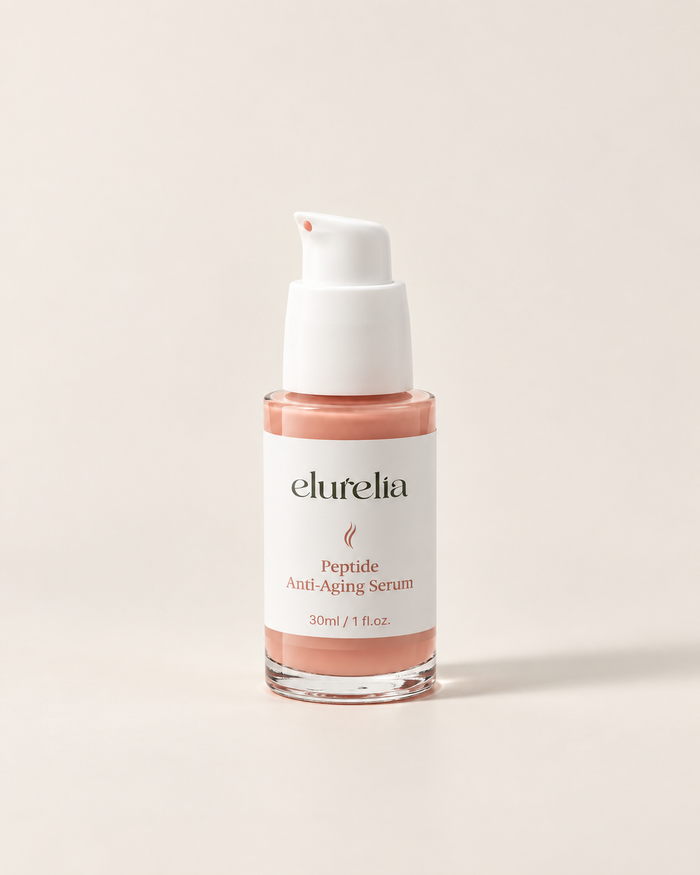
Use it last thing at night. Cleanse with a mild cleanser and lukewarm water and pat your skin dry. If you use a serum, apply it first; our Peptide Anti-Ageing Serum is made to sit under it. Then warm one or two pumps between your fingertips and press the cream over face and neck. On very dry days you can use it in the morning too, with sunscreen on top.
Used every evening, a 50 ml bottle lasts around two months. The one-bottle subscription every two months fits most people. It arrives at 10% off with free delivery, and you can skip, change or cancel at any time.
15What it adds up to
This is a rich, certified-natural night cream built on organic butters and oils, with glycerin, sodium PCA and aloe for water, and a small amount of plant ceramides. The evidence behind its main ingredients is modest but real. The evidence for its ceramides specifically is strongest when they are swallowed, and lab-based when they are applied.
If you want a comforting night cream with a short allergen list and an honest label, we think it earns its place. If you want a high-dose, skin-identical ceramide product or the strongest possible seal, other options will serve you better, and we have told you what they are.
16Your questions, answered
Do ceramide creams actually work?
Rich creams that combine humectants with butters and oils reliably help dry skin hold water. Whether the ceramides themselves add much at the levels used in most creams is less certain. The best human evidence for plant ceramides comes from oral supplements.
What are plant ceramides?
Ceramides from plants such as wheat, rice or konjac, usually with a sugar attached. On an ingredient list they often appear as glycosphingolipids.
How much ceramide is in the Ceramide Barrier Night Cream?
The percentage isn't published. The plant ceramides are 26th and 27th of 35 ingredients, after the fragrance, so they make up a fraction of a percent.
Is it gluten free?
It is labelled gluten free. Plant ceramides with this ingredient name are often extracted from wheat and purified. If you have a wheat allergy or coeliac disease, email us before buying and we will send the details for the current batch.
Is it vegan?
Yes. No ingredient is animal-derived.
Is it fragrance free?
No. It contains Parfum and two named allergens, Linalool and Limonene.
Can I use it in the morning?
Yes, on very dry skin, with sunscreen on top. It contains no SPF.
Should I use petroleum jelly instead?
For cracked or very sore skin, petroleum jelly seals more strongly and is cheap. It adds no water, though, and feels greasy. Many people with dry but intact skin prefer a rich cream.
Does the 60-Day Promise apply?
Yes, on your first order, conditions apply. The full terms are on our 60-Day Promise page.
This article is for general information and isn't medical advice. Cosmetic products: all claims describe the appearance and feel of skin.