What "fragrance-free" really means
Fragrance-free, unscented, allergen-free and hypoallergenic sound alike and mean different things. What EU labels tell you, what they don't, and how to check for yourself.
Walk down any skincare aisle and you will see four words used as if they meant the same thing: fragrance-free, unscented, allergen-free and hypoallergenic. They don't. Some have a clear meaning, some have almost none, and one can describe a product that contains perfume.
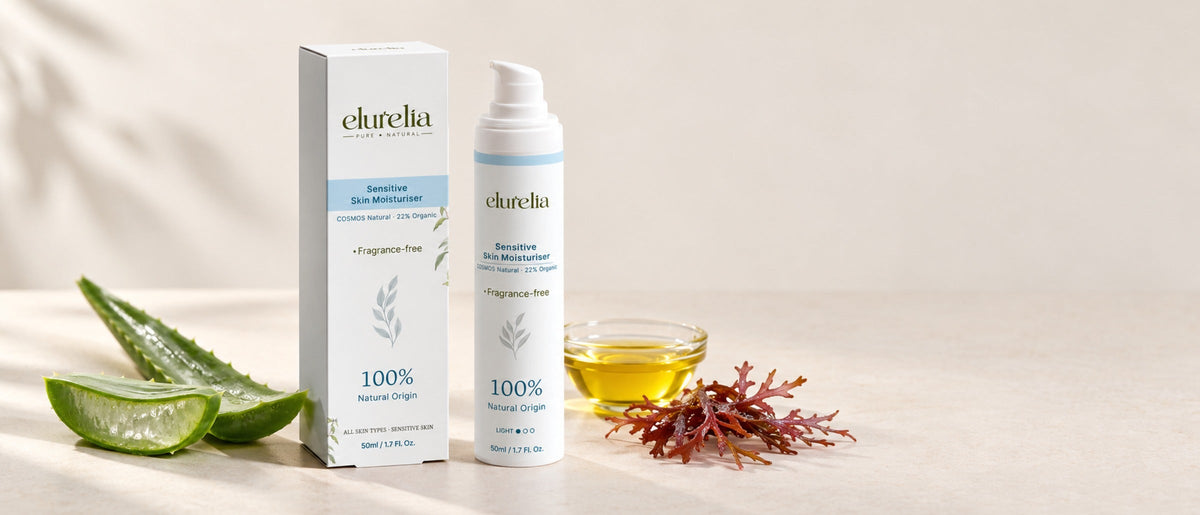
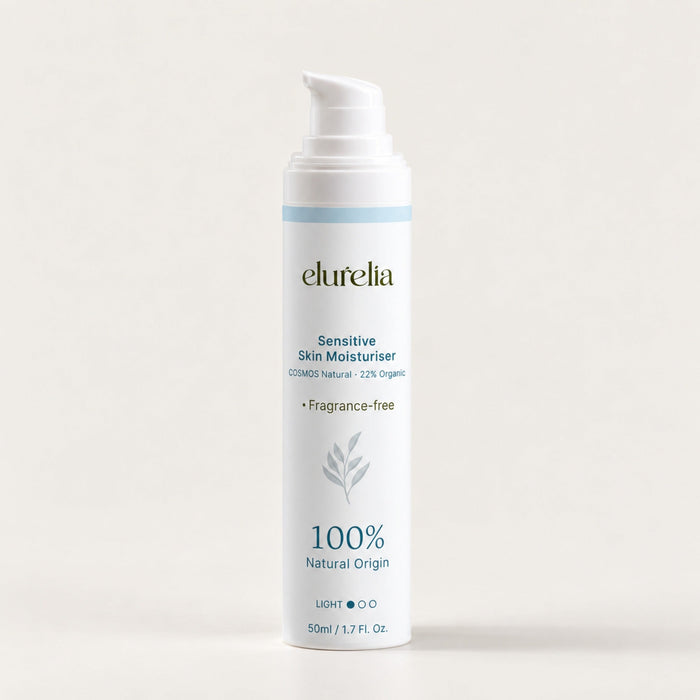
This guide explains what each term means under EU rules and in practice, and how to check a label yourself in under a minute. It covers every product we make, scented and fragrance-free alike. If you are here for a moisturiser, our Fragrance-Free Sensitive Skin Moisturiser and Fragrance-Free Rich Cream are both built on the rules below.
01The short answer
| Label | What it should mean | Legal definition in the EU? |
|---|---|---|
| Fragrance-free | No Parfum and no essential oils added for scent | No |
| Unscented | No noticeable smell. A masking fragrance may have been added | No |
| Allergen-free / allergen label free | None of the listed fragrance allergens above the labelling threshold | Partly: the allergen list is legal, the claim is not |
| Hypoallergenic | Designed to keep the risk of allergy low | No; EU guidance says it needs evidence |
The ingredient list is the only part of the pack that is fully regulated. Everything else on the front is a claim, and claims have to be truthful and supported, but they aren't defined word by word.
02What EU law actually requires
Under the EU Cosmetics Regulation, every ingredient must be listed using its INCI name, in descending order down to 1%, and in any order below that. Perfume ingredients can be grouped together under one word: Parfum (or Aroma). That is the only part of a formula a company is allowed to keep secret.
There is one exception. Certain fragrance substances, known to cause allergy, must be named individually when they are present above 0.001% in a product you leave on the skin, or above 0.01% in a product you rinse off. Until recently there were 24 of them plus two moss extracts: names like Linalool, Limonene, Citronellol and Geraniol that you may have seen at the end of ingredient lists.
The expanded allergen list
Evidence: EU regulation- Commission Regulation (EU) 2023/1545 of 26 July 2023 amending Regulation (EC) No 1223/2009 as regards labelling of fragrance allergens in cosmetic products. Official Journal of the European Union L 188, 2023. Read the source
We label every product to the expanded list already. It is why some of our scented products list five allergens where older labels might have shown two.
03Fragrance-free: what it should mean
A fair definition, and the one we use, is: no Parfum or Aroma, and no essential oils. A product can meet that definition and still have a smell, because many ingredients smell of something. Cocoa butter smells of cocoa. Aloe and plant oils have faint natural scents. Nothing is added to create or hide them.
The grey area is plant extracts that smell and also contain fragrance substances naturally. Vanilla bean extract is an example: it isn't a perfume, but vanilla contains vanillin, which is on the expanded allergen list. Our Fragrance-Free Rich Cream contains organic vanilla bean extract, and we say so on the page and suggest a patch test if you react to vanilla.
04How often labels get it wrong
Fragrance-free labels
Evidence: product survey- Xu S., Kwa M., Lohman M.E., Evers-Meltzer R., Silverberg J.I. Consumer preferences, product characteristics, and potentially allergenic ingredients in best-selling moisturizers. JAMA Dermatol 153(11):1099–1105, 2017. Read the source
The lesson isn't that fragrance-free labels are worthless. It is that the front of the pack is a starting point and the ingredient list is the answer.
05Unscented, allergen-free and hypoallergenic
Unscented describes how a product smells, not what is in it. Some unscented products contain a small amount of masking fragrance to cancel out the smell of the base. If you avoid fragrance for your skin, unscented isn't the same as fragrance-free.
Allergen-free or "allergen label free" usually means that none of the listed fragrance allergens is present above the labelling threshold. The product can still contain Parfum. Our Micellar Cleansing Water is an example: it contains Parfum and no listed allergens, and we call it lightly scented, never fragrance-free.
Hypoallergenic has no fixed definition. EU guidance on cosmetic claims says a product should only use it if it has been designed to minimise its potential to cause allergy, with evidence to support that. It can't mean that nobody will react. We don't use the word.
06How many people it affects
Fragrance allergy
Evidence: large population study- Diepgen T.L., Ofenloch R., Bruze M., et al. Prevalence of fragrance contact allergy in the general population of five European countries: a cross-sectional study. Br J Dermatol 173(6):1411–1419, 2015. Read the source
So fragrance isn't a problem for most people. For the few who are allergic it is a real one, and they can't know in advance which product will set it off. Leaving fragrance out of a face cream is a simple way to take that risk off the table.
07How to check a label in under a minute
- Look for Parfum, Aroma or Fragrance in the ingredient list. If it is there, the product contains added fragrance, whatever the front says.
- Look for essential oils: Latin plant names followed by "oil", such as Lavandula Angustifolia Oil or Citrus Aurantium Dulcis Peel Oil.
- Read the last few ingredients. That is where listed allergens such as Linalool, Limonene, Citronellol and Geraniol appear.
- Note any plant extracts you already know you react to. Daisy-family plants such as camomile and arnica are common examples.
- If in doubt, patch test: a small amount on the inner forearm once or twice a day for five days.
08Where our products stand
We put a marker on every product so you don't have to decode the list. ○ means fragrance-free: no Parfum, no essential oils. ◐ means lightly scented or scented, and the number of declared allergens is always given next to it.
| Product | Marker | Declared allergens |
|---|---|---|
| Fragrance-Free Sensitive Skin Moisturiser | ○ Fragrance-free | 0 |
| Fragrance-Free Rich Cream | ○ Fragrance-free (contains vanilla bean extract) | 0 |
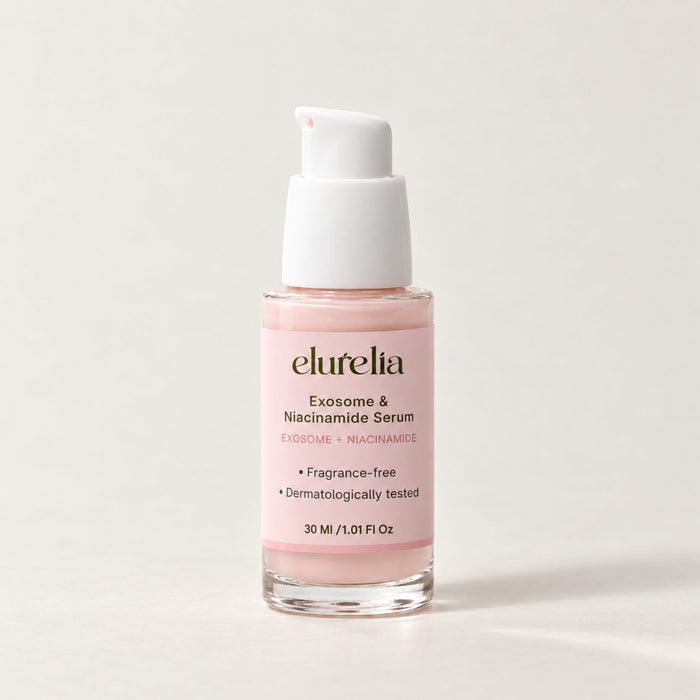
| Fragrance-Free Niacinamide Serum | ○ Fragrance-free | 0 |
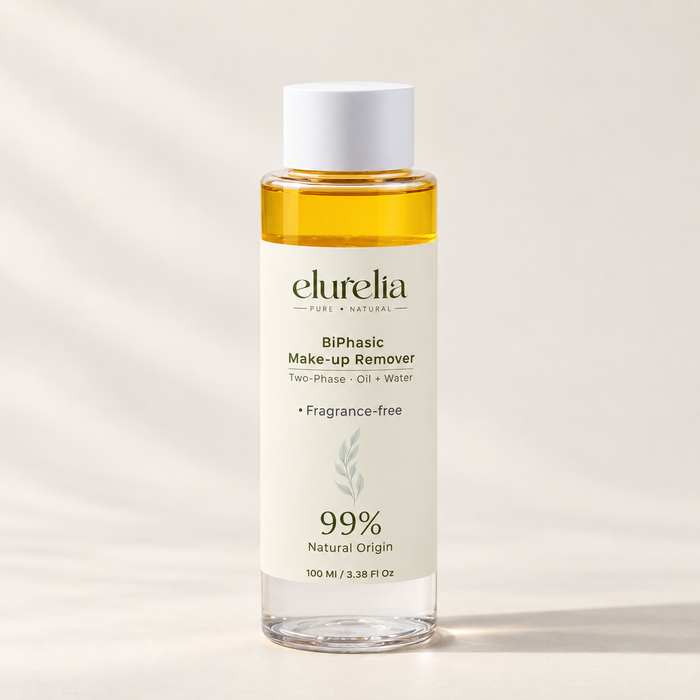
| Fragrance-Free Biphasic Make-up Remover | ○ Fragrance-free (contains camomile) | 0 |
| Micellar Cleansing Water | ◐ Lightly scented | 0 |
| Ceramide Barrier Night Cream | ◐ Lightly scented | 2 |
| Peptide Ageless AM/PM Cream | ◐ Lightly scented | 5 |
Scented isn't bad. Many people enjoy it and never react. We just think you should be able to choose knowing exactly what is in the bottle.
09Your questions, answered
Is fragrance-free the same as unscented?
No. Fragrance-free should mean no added fragrance. Unscented means no noticeable smell, and a masking fragrance may have been added to achieve that.
Can a fragrance-free product smell?
Yes. Butters, oils and plant extracts have their own smell. Nothing is added to create or hide it.
What are the 26 fragrance allergens?
The substances EU law required to be named on labels until 2023, such as Linalool, Limonene and Geraniol. Regulation (EU) 2023/1545 expanded the list to more than 80.
Does allergen-free mean fragrance-free?
No. A product can contain Parfum and still have none of the listed allergens above the labelling threshold.
Is natural fragrance safer?
Not necessarily. Many listed allergens come from essential oils, and several essential oils are now on the list themselves.
Does fragrance-free mean I won't react?
No. It removes one common cause. Other ingredients can still irritate or cause allergy, so patch test if your skin reacts easily.
This article is for general information and isn't medical advice. Cosmetic products: all claims describe the appearance and feel of skin.