Biphasic remover or micellar water?
Oil and water in one bottle, or tiny cleansing micelles in water. Which suits your make-up, your eyes and your routine, and when to use both.

Both sit on the bathroom shelf, both go on a cotton pad, and both take make-up off. They do it in different ways, and that difference decides which one you need.
01How each one works
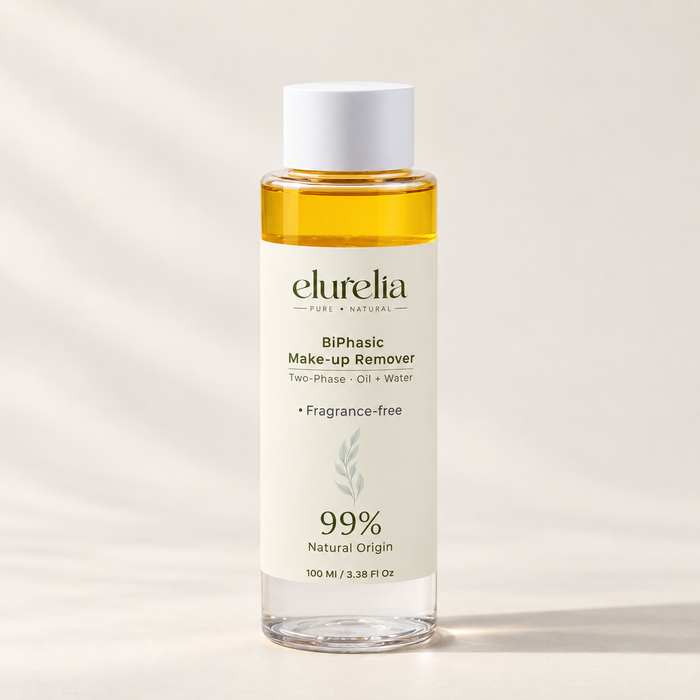
A biphasic remover has two layers: an oil phase and a water phase. You shake to mix them. The oil dissolves waxes, oils and water-resistant film-formers, which is why it copes with waterproof mascara. The water phase refreshes the skin and takes away most of the greasy feel.
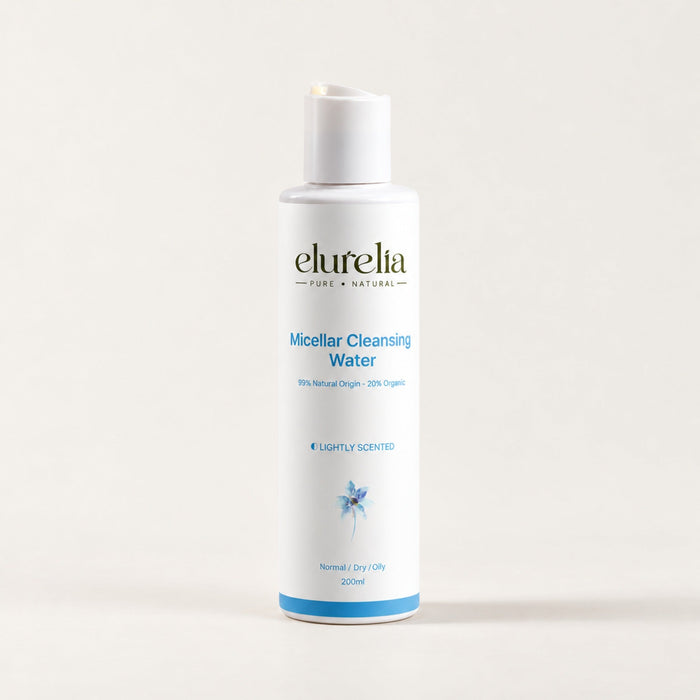
Micellar water is water with a small amount of mild cleansing agent. The cleansing molecules group into tiny clusters called micelles that pick up oil and make-up as you wipe. It leaves no oily trace and needs no shaking. Our research on micellar water explains the chemistry in detail.
02Side by side
| Biphasic remover | Micellar water | |
|---|---|---|
| Waterproof mascara | Dissolves it with oil | Often needs rubbing |
| Long-wear foundation and lipstick | Handles it well | May need several pads |
| Light, everyday make-up | Works, but more than you need | Ideal |
| Feel afterwards | Fresh, with a light oil trace | No trace at all |
| Shake before use | Yes | No |
| Lash extensions | Check with your technician; oils can loosen glue | Usually fine |
| Our versions | Fragrance-free, 0 declared allergens | Lightly scented, 0 declared allergens |
03For sensitive eyes
Fragrance is one of the common causes of eyelid irritation, and eye make-up removers go on the most reactive skin of the face. Our Fragrance-Free Biphasic Make-up Remover has no fragrance at all. Our Micellar Cleansing Water has no declared allergens but does contain a small amount of Parfum.
Both of ours contain camomile, from the daisy family. If you are allergic to that family, neither is right for you.
04Which to choose
| If you… | Choose |
|---|---|
| Wear waterproof mascara most days | The biphasic remover |
| Wear light make-up or none | Micellar water |
| Want no oily trace at all | Micellar water, or the biphasic followed by a cleanser |
| React to fragrance | The biphasic remover |
| Wear lash extensions | Micellar water, after checking with your technician |
05Using both
A common routine is the biphasic remover on the eyes and lips, then micellar water or a rinse-off cleanser on the rest of the face. It takes a minute longer and avoids rubbing. For the rinse-off step, micellar water or cleanser? explains the options.
06How to use each
Biphasic remover: shake, soak a pad, hold it on closed eyes for about ten seconds, then wipe downwards. Use a fresh pad for each eye and one for the lips.
Micellar water: soak a pad and sweep it across the face from the centre outwards, turning the pad as it picks up make-up. Hold it on the eyes for a few seconds too; it helps with light mascara.
With either, stop when the pad comes away clear of colour. More pads are better than more pressure.
07Two myths
"Micellar water is just water." It contains mild cleansing agents, which is why it works. That is also why some people like to rinse after it.
"Oil-based removers cause breakouts." The light esters in a biphasic remover are very different from heavy oils. If you are breakout-prone and worried, follow with a rinse-off cleanser.
08Quick answers
Is biphasic better than micellar water?
For waterproof and long-wear make-up, usually yes. For light make-up and a quick cleanse, micellar water is often enough.
Can I use micellar water on my eyes?
Yes, for light eye make-up. Waterproof mascara usually needs an oil-based remover.
Do I need to rinse after either?
Neither needs rinsing. Many people rinse or follow with a cleanser for a fresher finish.
This article is for general information and isn't medical advice. Cosmetic products: all claims describe the appearance and feel of skin.