The research behind our Peptide Ageless AM/PM Cream
Whether one cream can really work morning and night, what the peptides in it do and how strong that evidence is, what two forms of hyaluronic acid add, and what none of it proves.

Most anti-ageing routines are built to be sold, not used. A day cream, a night cream, a serum, an eye cream, a booster. The trouble is that skincare only does anything if you use it, every day, for months. This cream takes a different approach: one peptide cream, morning and night.
This guide explains whether that approach makes sense, what each ingredient does, and how strong the evidence behind each one really is. If you only want the product, the AM/PM cream page has everything in one place.
01The case for one cream
The most reliable finding in skincare is not about any ingredient. It is that people who use a moisturiser and sunscreen every day, for years, have better-looking skin than people who don't. Adherence, the plain habit of using a product, matters more than the difference between one good cream and another.
Long routines are hard to keep. A product that works morning and night, sits well under sunscreen and makeup, and still feels nourishing enough for night removes one decision from your day. That is the whole idea behind this cream.
02Is there a real difference between day and night creams?
Less than the marketing suggests. Day creams tend to be lighter so they sit well under makeup, and some contain SPF. Night creams tend to be richer and sometimes contain ingredients that are better kept out of the sun, such as retinoids. Beyond that, your skin doesn't switch into a different mode at night that only a night cream can serve.
This cream contains no retinoids and no SPF, so nothing in it needs to be kept to one time of day. It is light enough for the morning and nourishing enough for night. We go into this in more detail in Day cream or night cream?
03What changes as skin ages
From our mid-twenties, skin gradually makes less collagen and elastin, the proteins that keep it firm and springy. It holds less water, its outer layer renews more slowly, and it produces less oil. Sun exposure speeds all of this up. The visible results are fine lines, a loss of firmness and a duller, drier surface.
No cream reverses that process. What a good cream can do is keep the skin well hydrated, which makes lines less visible straight away, support the barrier, and deliver ingredients that may help skin cells keep working well. Sunscreen does more to slow visible ageing than any of them.
04What peptides are
Peptides are short chains of amino acids, the building blocks of proteins. The skin makes and uses many of them as signals. When collagen breaks down, for example, some of the fragments act as messages that tell cells to make more.
Cosmetic peptides are designed to mimic or support those signals. Some are signal peptides, meant to encourage cells to make collagen; others carry trace metals or relax muscle movement. The idea is appealing, but the evidence varies enormously from one peptide to another, and many have been tested mainly in the lab or by the companies that sell them. So each peptide deserves its own look.
05How we rate the evidence
| Label | What it means |
|---|---|
| Human trial | People used it and it was measured, ideally against a comparison. |
| Small human test | A short test on a few volunteers, often inside a larger study. |
| Review | A summary of earlier studies. |
| Lab | Cells in a dish. Mechanism, not results on a face. |
| Maker's data | Tests run or published by the company that sells the ingredient. |
None of these studies tested our cream. They tested ingredients, usually in other products or on their own. We explain why each is in the formula and say what each doesn't prove.
06Hexapeptide-11
Hexapeptide-11 is a chain of six amino acids first identified in yeast fermentation. It is the same peptide that features in our Peptide Anti-Ageing Serum.
Hexapeptide-11
Evidence: lab + small human test- Sklirou A.D. et al. Hexapeptide-11 is a novel modulator of the proteostasis network in human diploid fibroblasts. Redox Biol 5:205–215, 2015. Read the source
07What "cell maintenance" means
Cells constantly make proteins, and some get damaged or folded wrongly. Healthy cells break these down and recycle them, a system scientists call proteostasis. As cells age, and under stress such as UV light, that system slows down, and damaged proteins build up.
The interest in hexapeptide-11 is that, in the lab, it appeared to switch that maintenance system on. It is a promising mechanism. It is not yet a proven visible result on faces, and we won't describe it as one.
08Dipalmitoyl hydroxyproline
Dipalmitoyl hydroxyproline is hydroxyproline, an amino acid that makes up a large part of collagen, joined to two palmitic acid chains so it dissolves in oil. It is sometimes grouped with peptides in marketing, though strictly it is a single amino acid derivative.
Dipalmitoyl hydroxyproline
Evidence: maker's data- Seppic. SEPILIFT DPHP (dipalmitoyl hydroxyproline), ingredient information. Read the source
We include it because its position on the list suggests a meaningful amount, and because it is a reasonable ingredient. We give it the weakest evidence label because that is what the evidence supports.
09Hyaluronic acid, two forms
Hyaluronic acid
Evidence: human trial- Pavicic T. et al. Efficacy of cream-based novel formulations of hyaluronic acid of different molecular weights in anti-wrinkle treatment. J Drugs Dermatol 10(9):990–1000, 2011.
Large hyaluronic acid stays on the surface and forms a light, moisture-holding film. Smaller, hydrolysed forms work in the outer layers. Having both is a sensible choice for a cream worn morning and night: surface comfort by day, longer-lasting hydration overnight.
10Sodium PCA and glycerin
Sodium PCA
Evidence: review- Clar E.J., Fourtanier A. Pyrrolidone carboxylic acid and the skin. Int J Cosmet Sci 3(3):101–113, 1981.
- Fluhr J.W., Darlenski R., Surber C. Glycerol and the skin: holistic approach to its origin and functions. Br J Dermatol 159(1):23–34, 2008.
11Jojoba oil
Organic jojoba seed oil is the second ingredient, the largest after water. Jojoba is botanically a liquid wax rather than an oil, and its structure is close to some of the waxes in the skin's own sebum, which is why it feels light and absorbs well.
Jojoba oil
Evidence: review- Pazyar N. et al. Jojoba in dermatology: a succinct review. G Ital Dermatol Venereol 148(6):687–691, 2013.
12Mango butter and berry seed oils
Organic mango seed butter gives the cream its nourishing feel without heaviness. Strawberry seed oil and organic blueberry seed oil are rich in linoleic and alpha-linolenic acid, fatty acids the skin uses in its barrier lipids, and in vitamin E compounds. We found no human trials of these seed oils on skin, so we describe them only by what they contain.
13Ginkgo leaf extract
Organic ginkgo leaf extract is rich in flavonoids and terpenoids, plant compounds with antioxidant activity in laboratory studies. We found no human trial of topical ginkgo in a face cream that we could summarise, so it has no evidence label here. It is a supporting antioxidant.
14Phytosterols and vitamin E
Phytosterols are plant sterols, similar in structure to the cholesterol that forms part of the skin's own barrier lipids. They help the cream feel nourishing. Tocopherol (vitamin E) and ascorbyl palmitate, an oil-soluble form of vitamin C, protect the oils in the formula from oxidation. At these levels we don't market the cream on vitamins C or E.
15The soft tint
A small amount of iron oxide (CI 77491), a mineral pigment, gives the cream a soft, warm tint. It helps it blend on the skin. It is not a foundation and gives no coverage to speak of.
16Fragrance and the five allergens
The cream contains Aroma/Fragrance with natural essential oils, for a delicate floral scent. In 2023 the EU made its list of fragrance allergens that must be named on labels much longer, and the new rules apply to products placed on the market from July 2026. Under that list, this cream declares five: Linalyl Acetate, Geranyl Acetate, Linalool, Geraniol and Citronellol.
Most people use scented skincare without a problem. If your skin is reactive, patch test on your inner forearm once a day for five days before using it on your face, and choose a fragrance-free cream if you know fragrance disagrees with you.
- Commission Regulation (EU) 2023/1545 of 26 July 2023 amending Regulation (EC) No 1223/2009 as regards labelling of fragrance allergens in cosmetic products. Official Journal of the European Union L 188, 2023. Read the source
17What COSMOS Natural means here
The cream is certified COSMOS Natural by Ecocert: 99% natural origin and 9% organic origin. Four ingredients are organic: jojoba oil, mango butter, blueberry seed oil and ginkgo. The certificate covers sourcing, processing and permitted preservatives. It says nothing about how well the cream works, which is what the rest of this guide is for.
18Peptides or retinol?
Retinoids have the strongest evidence of any anti-ageing ingredient, but they can irritate, need a slow start, and aren't recommended in pregnancy. Peptides are gentler, with weaker and more varied evidence. This cream contains no vitamin A or retinoids. If you want to compare the options, read Retinol vs. retinol alternatives, explained, and if you are choosing a whole routine, Which anti-ageing routine is right for you?
19Layering with a serum and SPF
Apply serums first, then this cream. Our Peptide Anti-Ageing Serum shares the same peptide, hexapeptide-11, and adds a light layer of hydration underneath. In the morning, finish with a sunscreen of SPF 30 or higher. The cream contains no SPF.
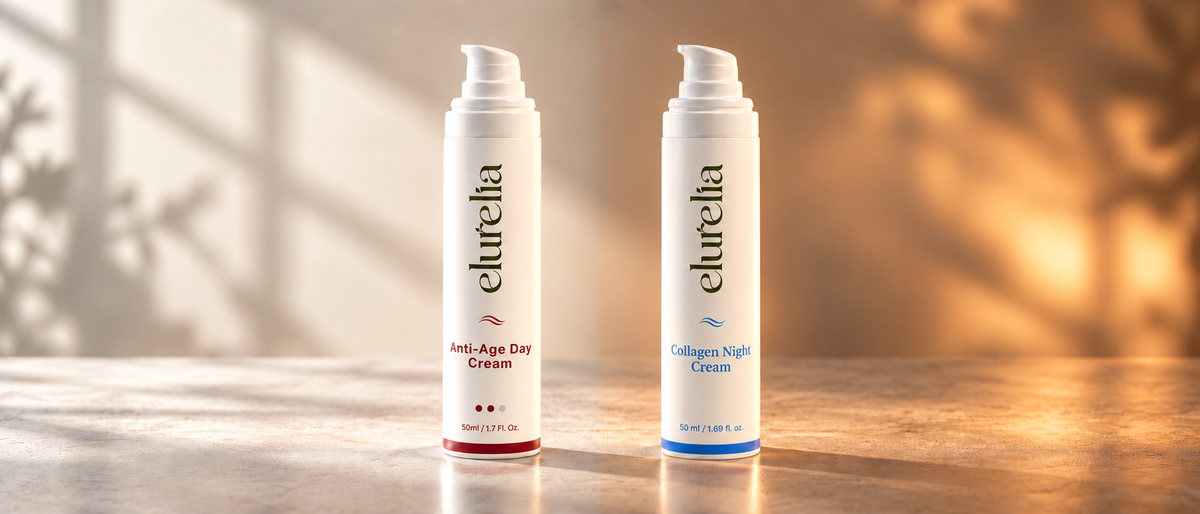
If you prefer separate creams for day and night, our Anti-Age Day Cream is a velvety option for mornings.
20What to expect, week by week
| When | What you may notice |
|---|---|
| Day one | Softer, more comfortable, better-hydrated skin. |
| Weeks 1–2 | Skin feels smoother morning and night. |
| Weeks 4–8 | A smoother, more even look with daily use. |
| Every morning | SPF on top, always. |
These are typical timelines for a hydrating cream, not a promise. Anything beyond hydration takes weeks of daily use to show, if it shows at all, which is why the 60-Day Promise on your first order (conditions apply) gives you two months.
21Peptide myths
"Peptides are a natural Botox." Some peptides are marketed this way. Neither of the two in this cream is, and no cream has been shown to match an injection.
"Peptides rebuild collagen." Some peptides encourage collagen production in the lab. Showing that on a face, in a controlled trial, is much harder, and for most peptides it hasn't been done.
"More peptides are better." The number of peptides on a label tells you nothing about how much of each is present or how good the evidence is.
22The step that matters most: sunscreen
If you do only one thing for visibly ageing skin, make it daily sunscreen. Ultraviolet light breaks down collagen and elastin and causes uneven pigmentation, and most of the visible ageing on the face is linked to sun exposure over the years. A randomised trial in Australia found that adults who used sunscreen daily showed less skin ageing after four and a half years than those who used it at their own discretion.
That is why this cream's morning routine always ends with SPF 30 or higher. The cream keeps skin hydrated and comfortable; sunscreen protects the investment.
- Hughes M.C.B. et al. Sunscreen and prevention of skin aging: a randomized trial. Ann Intern Med 158(11):781–790, 2013.
23For every skin, not only women's
Skin ageing doesn't depend on gender, and neither does this cream. Men's facial skin tends to be a little thicker and oilier, and shaving adds its own irritation, but the basics are the same: hydration, comfort and sunscreen. If you shave, apply the cream after shaving rather than before, and wait a moment if your skin stings.
24How to use it
- Morning and evening, start on freshly cleansed skin.
- Apply any serum first.
- Smooth a pea-sized amount over face and neck.
- In the morning, finish with SPF 30 or higher.
Used twice a day, 50 ml lasts around six to eight weeks.
25Who it suits, and who should skip it
It suits you if you want one cream for morning and night; your skin is mature, dry or normal; you want peptides without retinoids; and you want every ingredient and allergen named.
Skip it, or check first, if you need a fragrance-free product; you want strong human evidence for every active; your skin is very oily and prefers gels; or you want sun protection in the same product.
26What it adds up to
This is a well-made, certified cream that does the basics very well: two forms of hyaluronic acid, glycerin and sodium PCA for hydration, jojoba and mango butter for comfort, all in a texture that works morning and night. On top of that it adds two peptide ingredients, one with promising lab research and a small human test, one with only its maker's data.
We would buy it for the hydration and the simplicity, and see the peptides as a promising extra rather than the reason. If a one-cream routine is what you will actually keep, this is the one we would point you to.
27Your questions, answered
Can you use a peptide cream morning and night?
Yes. Peptides don't need to be kept out of the sun. This cream is designed for both, with SPF on top in the morning.
What do the peptides in this cream do?
In the lab, hexapeptide-11 switched on skin cells' maintenance systems, and a small volunteer test found better elasticity. Dipalmitoyl hydroxyproline is backed only by its maker's data.
Does it contain retinol?
No. It contains no vitamin A or retinoids.
Does it contain SPF?
No. Wear sunscreen on top every morning.
Can I use it with the Peptide Anti-Ageing Serum?
Yes. Serum first, then this cream. They share hexapeptide-11.
Is it fragrance free?
No. It declares five allergens: Linalyl Acetate, Geranyl Acetate, Linalool, Geraniol and Citronellol.
Is it vegan?
Yes. It is also gluten free and nut free, and certified COSMOS Natural.
Does the 60-Day Promise apply?
Yes, on your first order, conditions apply. The full terms are on our 60-Day Promise page.
This article is for general information and isn't medical advice. Cosmetic products: all claims describe the appearance and feel of skin.